How Jack Antonoff makes drums sound like 1976
 Tensormix Team
Ribbon mics in the corners, close mics muted, the whole kit smashed into a Watkins Copicat. The Antonoff drum sound is documented, and most of it translates to a bedroom rig.
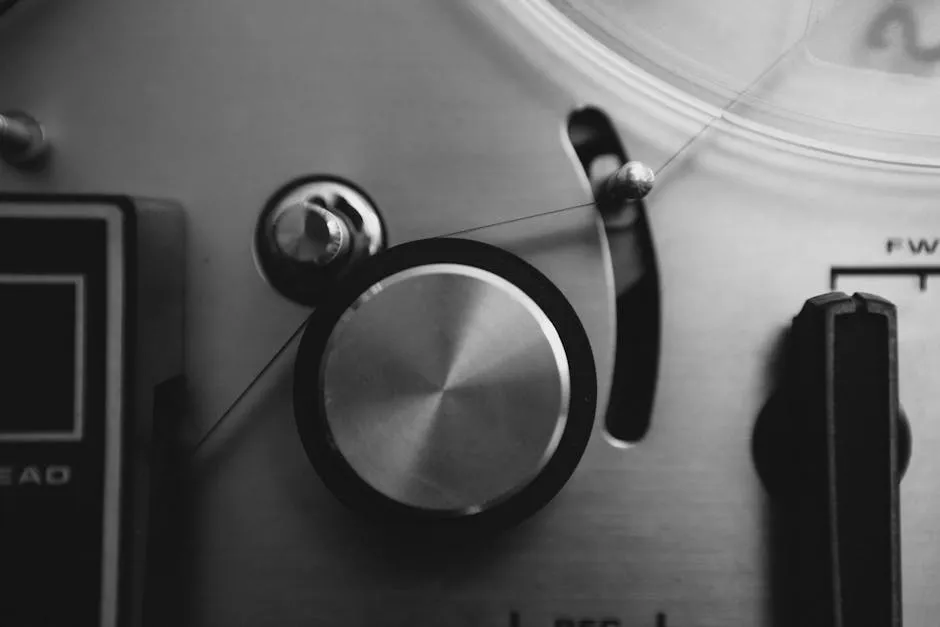
Open a session, load a clean acoustic kit sample, quantise it to the grid, and it will sound like a clean acoustic kit sample on a grid. Jack Antonoff's records do the opposite thing. The drums on Norman Fucking Rockwell!, Midnights, and Short n' Sweet feel like they were tracked in a room with peeling wallpaper in 1976, even when half the kit is a LinnDrum. The method is documented across his interviews, and most of it translates to a bedroom rig with a tape plugin and some patience.
Overheads and room, everything else muted
The defining move on Lana Del Rey records is subtraction. Talking to Tape Op about Norman Fucking Rockwell!, Antonoff described the moment he found the album's drum sound on "Mariners Apartment Complex": "It's this drum sound, where it's very roomy but quiet. I turned off everything but the overheads and the room." He's credited as drummer on several tracks of that album, so the feel and the mic choice are coming from the same person in the same room.
At his Brooklyn studio he runs two Coles 4038 ribbons in the corners of the room. He told Sound on Sound, "I have two mics in the top of the room that are really great for backup vocals, or acoustic room sound. I'll often record that in addition to stuff." Ribbons in the corners, overheads on the kit, close mics muted: that's the architecture.
This geometry can be somewhat faked. Pull up a drum sample with separate kick, snare, overhead, and room stems if the library offers them (GetGood Drums, Superior Drummer 3, and Addictive Drums 2 all do). Mute the close mics. Lean on the overhead and room channels for body. If your samples are close-mic only, send the whole kit to a convolution reverb loaded with a real drum room impulse, pull the dry signal down until you can hear the room more than the kit, and use that as your "room mic" bus.
Photo by Marc Schulte on Pexels
Smash it into a tape echo
The second move is what Antonoff does to the drums after they're tracked. On Midnights he ran them through a Watkins Copicat tape echo. He told MusicRadar, "I was smashing everything into a Copicat, and then I was taking transients to add to the kicks to make them buzzier, so then every once in a while, you hear the whole picture of the drums going through that when they're wobbling and delaying out." From the same MusicRadar interview: "The funny thing about Midnights is, as synthetic as it is, it's actually very analogue. So much was going into tape."
The Copicat shows up again on Sabrina Carpenter's "Manchild", this time alongside a Binson Echorec. In the Mix With The Masters Behind the Track feature on that record, Antonoff framed tape manipulation as "like the modern version of recording the room", the contemporary way of making something sound like it could only have happened in that moment.
A bedroom signal chain gets a long way toward this. Pick a tape plugin you trust (UAD Studer A800, Softube Tape, Waves Kramer Master Tape, and the free Chow Tape Model all do the basic job) and put it on the drum bus, not the master. Push the input until the meters are reading hot, pull the output back to match. That's the "smashing into tape" part. Then set up a parallel send to a tape delay plugin (Soundtoys EchoBoy, UAD Galaxy Tape Echo, Baby Audio Magic Dice) with a short delay time, high feedback, and wow/flutter cranked above where you'd normally leave it. Blend that send under the kit until you can hear it wobble on the tails but not on the transients.
The trick from Midnights is the second half of that quote: taking transients off the echo and layering them under the kicks. That means soloing the tape delay return, finding the smeared kick hits, bouncing those to audio, and tucking them under the original kick track at -10 to -15 dB. The kick stays punchy. The room around it starts to breathe.
Push and pull against the grid
The slow-feeling thing on these records is more accurately push and pull against a straight pulse. On "Manchild", Antonoff described the arrangement to MusicRadar as "the two main feels [are] the LinnDrum, which is as straight as can be, and then this galloping swung thing on top of it which kind of pushes and pulls in different directions." The straight programmed part holds the grid. The live snare on top swings against it.
He also manipulates tape speed in real time. From his Consequence Producer of the Year interview: "if you slow it down manually and you start literally f*****g with tape yourself, then it starts f*****g with pitch. So I'm doing that on drums and I'm doing that in her backup vocals. And I do that with Taylor too, on Dead Poets a lot."
In a session, this means two things. First, layer a programmed part (a LinnDrum sample pack, an 808, whatever fits the song) with a live or hand-programmed snare or hi-hat that isn't quantised. Play it in. Leave the timing wrong. Second, automate the wow or pitch parameter on your tape plugin so it drifts during sustained sections, or print a pass of the drum bus through a tape delay while riding the rate knob by hand. Most tape echo plugins map rate to a MIDI controller. Half a turn during the second chorus is enough to make the whole picture wobble for a bar.
Commit while you're tracking
The last piece is workflow. Antonoff told Mix Magazine, "If I'm recording a drum set, say, and I have eight mono mics and maybe two, three or four stereo tracks going, I'll dial in the sound to how I really like it and bounce that immediately if I'm being somewhat cautious, but I'll have plug-ins on it, run it through outboard tape stuff." The tape, the saturation, the room, the wobble: all printed in, not auditioned forever at mixdown.
Bounce the drum bus to a new audio track with the tape plugin and the room reverb baked in. Mute the originals. Mix the song against the bounced version. You'll make faster decisions, and the drums will sit like they were tracked that way, because functionally they were.