Inside Burial's Weird Production Flow That Made Untrue
 Tensormix Team
Burial made Untrue inside a single-track waveform editor with no piano roll and no grid. The constraint shows up in every drum slip, pitch-shifted syllable, and rain-soaked interlude.
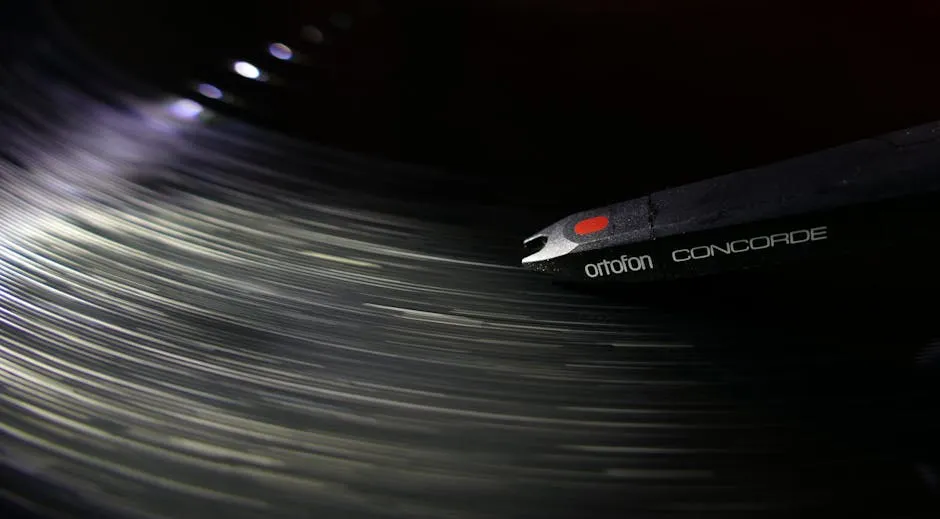
Open Sony Sound Forge, drop in a vocal sample, hit pitch shift, render. The file is now the new file. Undo the pitch shift and you undo everything you did after it too, or you reload from a backup. That's the editor Burial built every track on Untrue inside, and the constraint shows up in every bar of the record.
The editor that shaped the album
Sound Forge is a single-track waveform editor. No piano roll, no sequencer, no quantise grid. Edits are destructive: once a pitch shift or time-stretch is committed to the file, the previous version is gone unless a separate copy was saved. Burial told Martin Clark in 2006 that he stuck with it because he had no formal training: "I'm not a 'musician,' no training, nothing. So I was always scared of people who had studios. So I thought to myself, fuck it, I'm going to stick to this s///*/*y little computer program, Sound Forge. I don't know any other programs" (Blackdown Soundboy blog, March 2006).
That's a workflow constraint, and it explains why the drums sit slightly off the beat, why the vocals sound like one-take chops rather than tuned multisamples, and why the bass on a track like Archangel feels glued to the air rather than to a sidechain envelope.
Burial told MusicRadar's Andy Price, "Once I change something, I can never un-change it. I can only see the waves. So I know when I'm happy with my drums because they look like a nice fishbone." Arrangement happens by eye, on a horizontal waveform display, not against bars and beats.
Why the drums slip
Derek Walmsley's writeup in The Wire described Burial's percussion as intuitively arranged on the screen rather than rigidly quantised, creating minute hesitations and slippages in the rhythm. Speaking to Kode9, Burial put the aesthetic position plainly: "I'm not that into tunes that are so sequenced that all you can hear is the perfect grid, even on the echoes. With those kind of tunes, sometimes I just hear Tetris music" (via MusicRadar).
Practically, this means hi-hats and snares are dragged into position by ear, with one-shots placed where they look right against the kick waveform. Near Dark uses what Burial has discussed as a sampled bullet-shell drop from Metal Gear Solid in place of a closed hat, layered against found-sound percussion (documented in the Wikipedia entry on Untrue, citing his interviews). The hat hits don't repeat identically because they aren't programmed on a step; each one is an audio region nudged to taste.
If you want to chase the feel in a modern DAW, the move is to bounce your drum hits to audio, drop the grid, and slide them by hand until they look uneven on the waveform. Humanise as a random offset won't get you there; sliding them will.

Photo by Francesco Paggiaro on Pexels
The smeared vocal trick
The vocals on Untrue are mostly chopped R&B and acappella samples, with friends occasionally singing down a phone line when Burial needed a specific phrase, as he described to Emmy Hennings in Cyclic Defrost (November 2007). Words are cut from one source and laid next to words from another to build new sentences.
The androgynous quality (the way the lead on Archangel reads as both male and female at once) comes from pitch-shifting in both directions. Danny Chau, writing for The Ringer's ten-year retrospective and citing Philip Sherburne's Pitchfork work, described how chopped vocal snippets are pitch-shifted up and down to sound male and female simultaneously. A male sample pitched up two or three semitones starts to feminise; a female sample pitched down does the inverse. Stacking both, or alternating them across a phrase, gives the lead its smeared identity.
Burial's own framing of pitch in the Hennings interview is worth reading directly: "I do fuck with the pitches, but I don't understand things being in key. That's why I like that air-duct noise, like a presence in the air. A kind of rush, like the ghost of a sound. I take all my keys from that note, almost like a banshee" (Cyclic Defrost, 2007).
The tuning reference is an air-duct hum, and that's the centre of the record's harmonic world.
To get close to this in your own session: take a vocal, chop it into individual syllables, pitch a few of them up four or five semitones, pitch others down three or four, and reassemble the phrase from the wrong-gender versions. Time-stretch a couple of the chops past the point where the algorithm starts to smear and leave the artefacts in. Sound Forge's stretch will fight you in a useful way; most modern stretch algorithms are too clean and need to be pushed (lower the quality setting, shorter window) to get a comparable degradation.
Sub-bass and the glow
"Raw, rolling drums and sub is the sound I love... and if you don't get that then you won't ever get it"
To Mark Fisher in The Wire, he framed the combination directly: "Something happens when I hear the subs, the rolling drums and vocals together. To me it's like a pure UK style of music."
What's audible on the record is sub that moves slowly, sits low, and breathes against the vocal rather than ducking on a tight sidechain. Whether the source is a sampled sine, a sampled bass note from another record, or a synthesised tone in another program rendered to wav and imported isn't documented. The smearing on top of it (the sense that the low end has weather around it) comes from the layered atmospheric material: rain, vinyl hiss, room noise, the air-duct tone he tunes to.
Layering the crackle
The vinyl hiss and rain layers are documented as a consistent part of the palette. Burial sampled atmospheric sounds - rain and vinyl hiss alongside incidental noises including the Metal Gear Solid bullet shells and a sound of car keys taken from a Vin Diesel film.
In session terms, that's a bed of looped noise (rain, crackle, hiss, room tone) running continuously under the arrangement, with the texture sitting on its own track rather than a crackle plugin on the master. When the beat drops out for an interlude like In McDonalds, the bed is what's left holding the space. Burial described the goal of Untrue to Hennings as wanting to "make it glow a bit more, and having these little clips of vocals, and tiny moments of warmth for a split-second, and then it would go, it would fade out" (Cyclic Defrost, 2007). The glow is the bed; the vocals are the flickers on top of it.
Build the bed first, the bass second, the chopped vocal phrases third. Arrange by eye, slide the hits off the grid, pitch half your vocal chops the wrong way, and leave the stretch artefacts in.