Five guitar amp sims worth owning if you mix metal in the box
 Tensormix Team
Nolly X, ToneHub, Amped Roots, Spark and Ampknob: what each one is genuinely good at, where they overlap, and which to buy first if you mix modern metal.
You've tracked a clean DI, your timing is locked, the part is right. The amp sim is the only thing standing between that DI and a wall of guitars that holds its own in a busy mix. Below are five sims worth owning if metal is what you mix in the box, what each one is genuinely good at, and where the overlap matters when you're deciding which to buy first.
A quick framing note before the picks: the cab and IR section usually moves more frequency content than swapping amp models. All five of these let you bypass the stock cab or load third-party IRs, which means the buying decision is really about preamp voicing, feel under the pick, and workflow.
Neural DSP Archetype: Nolly X
The modern metal default. Four tube amps (Bogner Shiva, JCM800 2203, Peavey 5150, Victory Kraken) modelled with Adam "Nolly" Getgood, plus 640 cab IRs Nolly captured himself with four of his preferred mics. Sound on Sound's Martin Walker called it "some of the best amp/cab modelling I've ever experienced" in his December 2019 review of the original Archetype: Nolly.
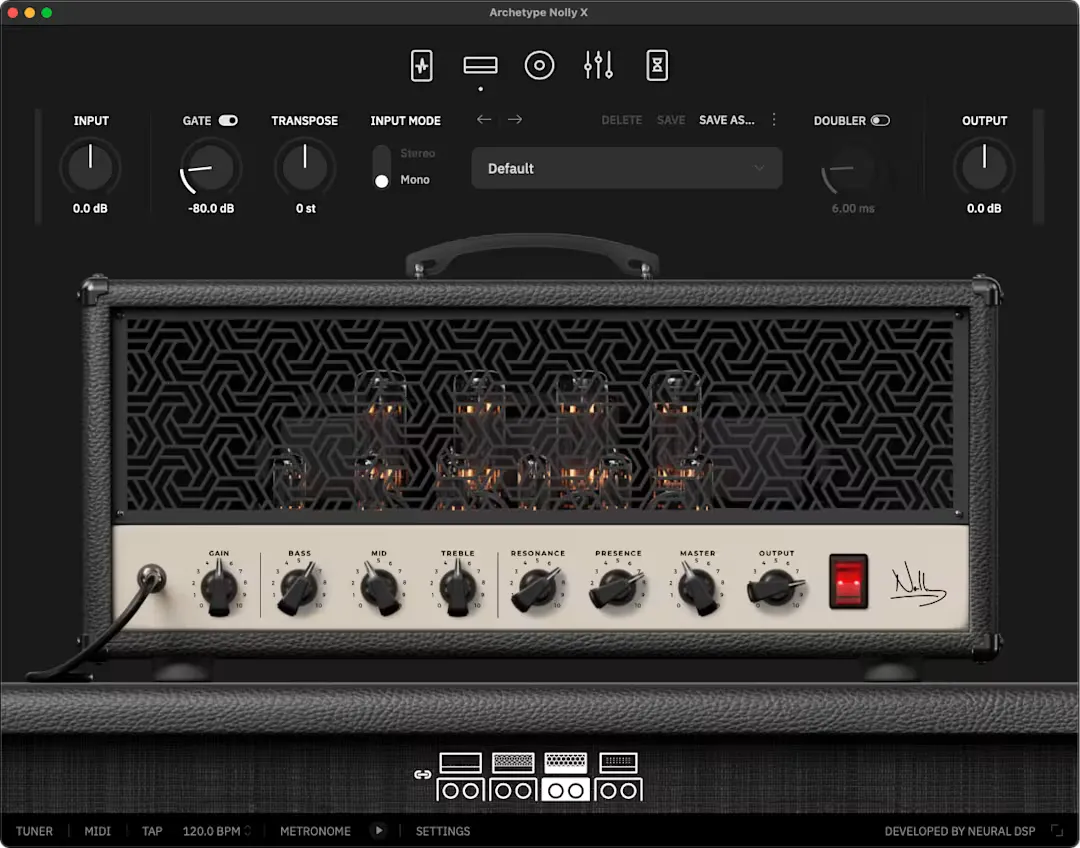
It's also the sim behind the loudest piece of evidence in this whole category. Spiritbox tracked Eternal Blue entirely with Neural DSP plugins, using Archetype: Nolly for the heavy tones and Archetype: Plini for cleans. Mike Stringer told Total Guitar that for recording, the Nolly plugin is all he uses.
Spiritbox, "Holy Roller" - guitars tracked through Archetype: Nolly
What you get: tight, polished, mix-ready high-gain that needs less corrective EQ than almost anything else in this list. What you give up: the effects section is compact compared to the other Archetypes, CPU isn't trivial across many instances, and the voicing skews modern. Classic-rock players sometimes find it sterile. Around $129 with a 14-day trial and no iLok requirement.
STL ToneHub
ToneHub is the odd one out structurally. It's a single shell that hosts producer- and artist-built presets from Josh Middleton, Will Putney, Andy James, Howard Benson and others, running on STL's Tracing engine with analog-modelled parametric controls so a preset still feels like an amp under your fingers rather than a static snapshot. You can also trace your own rig.
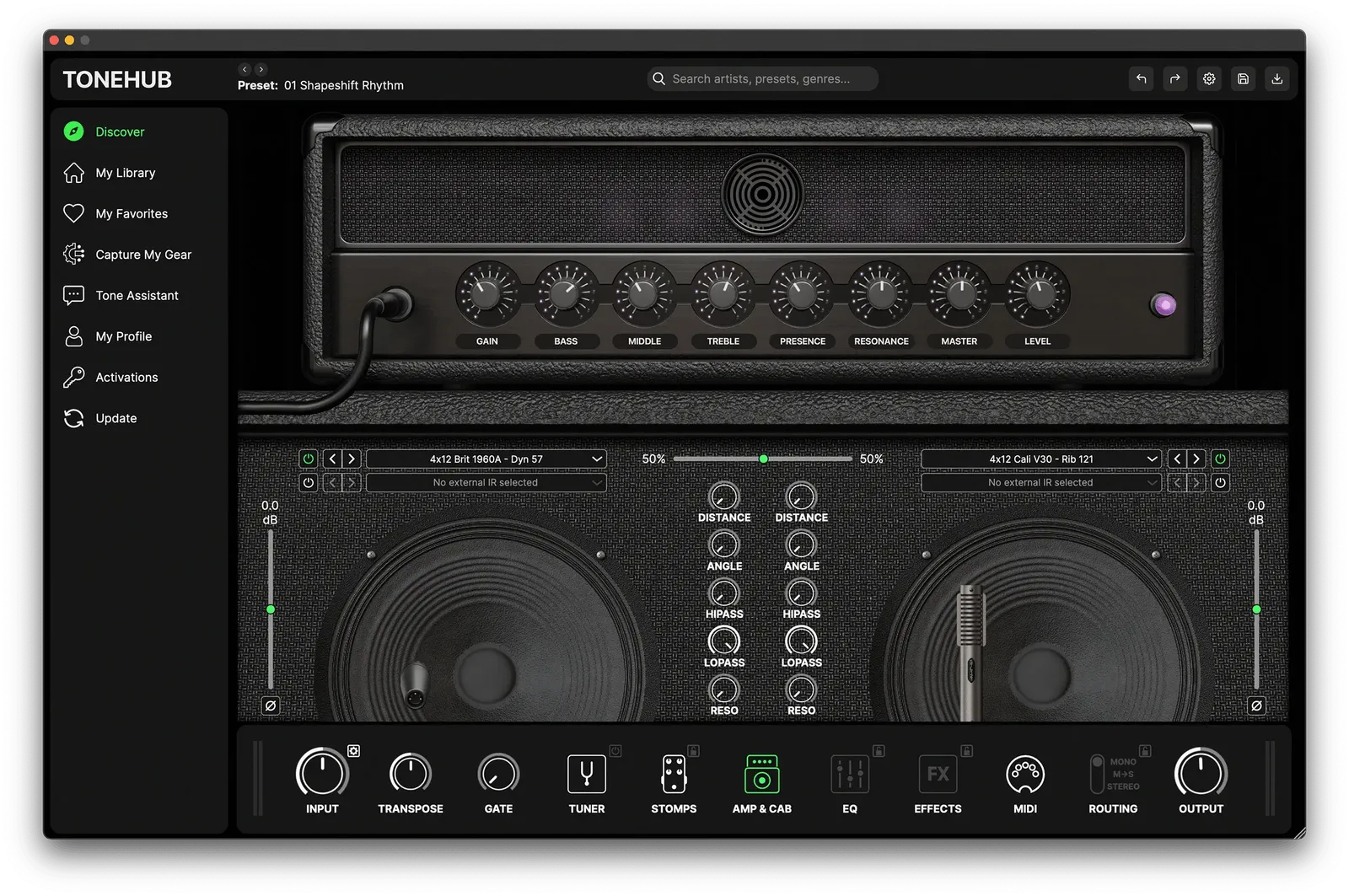
The pitch: if you want a specific producer's working tone as the starting point instead of building one from a generic 5150, ToneHub gets you closer in fewer moves. The trade-off is the business model. ToneHub is subscription, $14.99/month or $144/year for All Access, and expansions sit behind that or one-off purchases. If you bounce between styles and want producer presets as references, it earns its keep. If you want to buy once and own forever, it doesn't fit. 10-day free trial.
ML Sound Lab Amped Roots
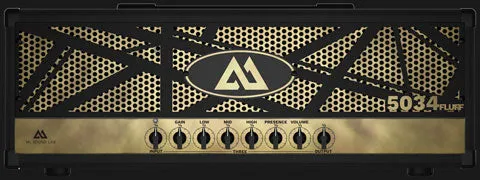
Built with Fluff (a.k.a Ryan Bruce), Amped Roots is the no-fuss modern metal pick. The free version ships with one amp ("5034 Fluff"); the Full License adds three more ("5151 Fluff", "Freeman Fluff", "Mega Fluff") plus Fluff's personal cab IRs. The 3D cab room lets you move and angle mics on Mega Oversize, Freeman V30 and Freeman M25 speakers.
Where it wins: punchy modern rhythm tones, especially for chug-forward styles, with very little tweaking required. Where it doesn't: cleans aren't its strong suit by most reviewer accounts, and the amp count is smaller than ToneHub or AmpHub. The free tier alone is worth installing as a second voice next to Nolly when you want tonal variation across the stereo image rather than the same sim twice.
Mercuriall Spark (now in Ampbox)
Spark is a Marshall suite: AFD, JCM800, JMP Super Lead, JMP Super Bass, plus four cabs and four overdrives. The modelling is neural-network-based at the component level, which translates to preamp-to-power-amp interaction that feels like a Marshall when you push it rather than a static EQ curve sitting on top of distortion. MusicRadar's review described it as delivering "some of the finest emulated Marshall tones we've heard."
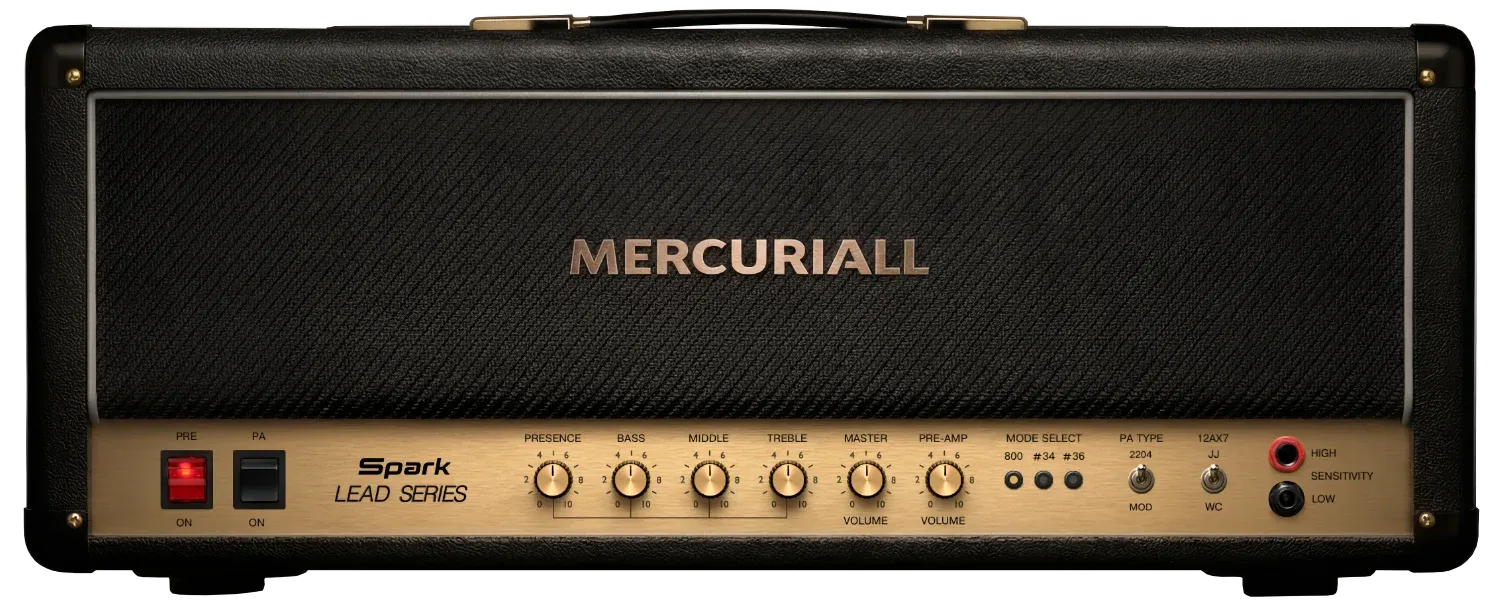
The remit is narrow on purpose. If you're mixing thrash, classic metal, hard rock, or anything where the rhythm tone is essentially a JCM800 with a boost in front, Spark covers it better than the broader-spectrum sims on this list. If you're mixing modern djent and 7-string detune, it's the wrong tool. Worth mentioning - the standalone Spark is no longer sold on its own and now lives inside the free Mercuriall Ampbox platform. Existing licenses carry over.
Bogren Digital Ampknob (BDH and BDM series)
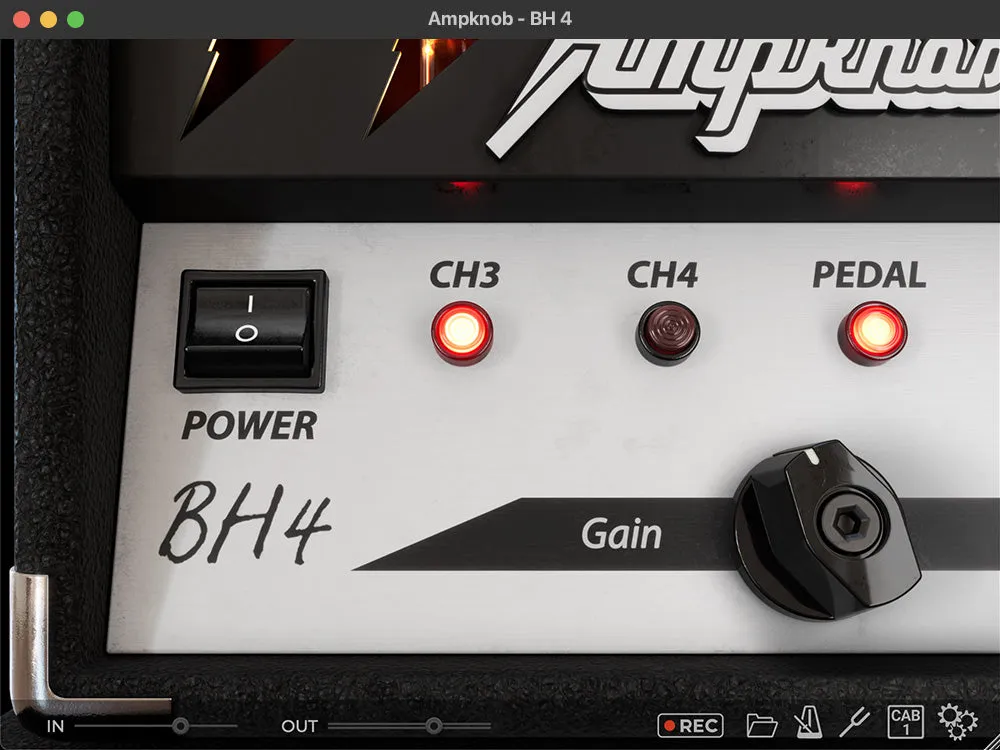
One physical knob, one amp voicing per plugin, tuned by Jens Bogren around the Fascination Street sound (Arch Enemy, Amon Amarth, Sepultura, Opeth). The BDH III models a modded high-gain amp from Bogren's personal collection that has appeared on records cut at the studio. Internally, Bogren's IRDX (Impulse Response Dynamix) adds dynamic speaker behaviour rather than baking the cab in as a static IR, which is part of why these hold up when you push the gain.
The one knob is also the limitation. You're not deep-tweaking inside the plugin - you're picking the right Ampknob for the part. Each is its own voicing and you build a collection over time. The standalone version includes a metronome, tuner and recorder. Individual plugins around $49, bundles priced three-for-two, 14-day trial, no iLok. The fastest "open it, turn it up, print it" workflow on this list.
Where the overlap matters when you're picking one
Nolly and Amped Roots overlap heavily on modern high-gain rhythm. Owning both is useful for stereo variation (one side Nolly, one side Amped Roots), not for redundant coverage. Ampknob doesn't replace either but layers brilliantly as a centre thickener under a hard-panned Nolly/Amped Roots wall. Spark covers everything the other four don't, which is older Marshall-led metal and rock crunch. ToneHub is the wildcard: subscribe for a month when you're stuck on a tone, cancel when you aren't.
If you're buying one and you mix modern metal, start with Archetype: Nolly X. Track the DI clean, print left and right as separate performances, audition the stock 640 IRs against one free third-party cab, high-pass the bus around 90Hz, and you have a wall that needs almost nothing else to sit in the mix.