Where to use saturation in your mix
 Tensormix Team
Saturation on the master bus is safe and boring. The real work happens on bass DIⅡs, snare mics, vocals, and synths - where it generates the harmonics your small speakers can play.
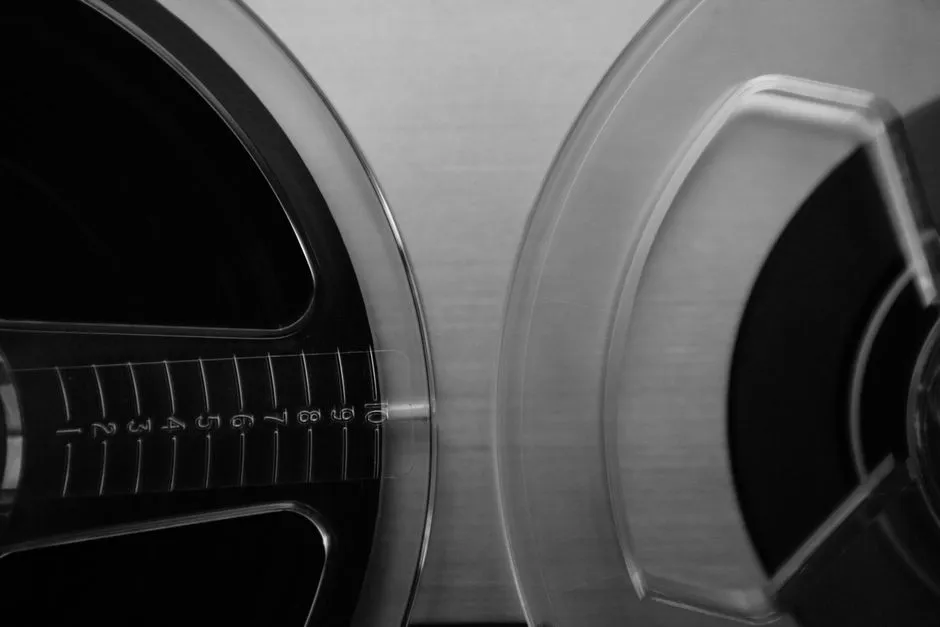
Saturation on the master bus is the safest, least interesting place to use it. A touch of tape across the 2-bus glues the mix and rounds the loudest peaks, which is fine, but every other instance of saturation in the session would have done more for the mix than the one on the stereo out. Harmonic saturation is a frequency-domain tool first and a "warmth" tool second.
What saturation adds
A saturator generates new frequencies at integer multiples of whatever's going in. Feed it a 100 Hz sine, and it spits out energy at 200 Hz, 300 Hz, 400 Hz and so on, with the level falling off as the harmonics go up. The character of the saturator decides which of those harmonics are loudest.
Even-order harmonics (2nd, 4th, 8th) land at octaves above the fundamental, which makes them musically consonant with whatever note you played. Tube circuits, with their asymmetric transfer curves, lean even. Odd-order harmonics (3rd, 5th, 7th) land on a dominant-7th-chord shape above the root and can read as edgy or dissonant depending on the key. Transistor and clipper-style distortion lean odd. Tape sits in the middle, weighted toward 2nd and 3rd, which is why it works on so much material without obvious commitment to a flavour. Sound on Sound notes that tape machines were historically calibrated to 3% third-order distortion, which is a useful number to keep in mind: that's the reference operating point, not a sign of a broken machine.
Bobby Owsinski, in the 6th edition of his Mixing Engineer's Handbook, describes the saturated sound as "a very slight amount of compression, the addition of even-order harmonics, a gentle roll-off of the high frequencies, and a softening of the transients." All four things happen at once. That's why a single tape stage often replaces an EQ move, a transient softener, and a light compressor in one go.
Four places it belongs before the mix bus
Bass DI. A clean DI puts most of its energy in the 40-80 Hz range, which laptop speakers and earbuds can't reproduce. Saturate the DI and you generate harmonics at 80, 160, 240 Hz and up, which small speakers can play. The ear reconstructs the missing fundamental from the harmonic series, so the bass sounds present on a phone even though the phone can't physically produce the low note. High-pass before the saturator at around 80-100 Hz so the sub stays clean, or use a multiband saturator and exclude the bottom band entirely. Parallel the saturated copy in at 30-50% under the dry DI and you keep the weight on monitors while gaining translation everywhere else.
Snare bottom mic. The bottom mic is mostly wire rattle in the 2-5 kHz range, and it tends to behave inconsistently hit-to-hit. A light tape stage there, set to maybe 1-3 dB of gain reduction equivalent, softens the spikiest transients and thickens the low-mid body of the rattle. The downstream compressor then has a much more predictable signal to work with. Sound on Sound's own technique writeup on saturation strategies puts it bluntly: saturation on kick and snare "can often round out the transients in quite a graceful way," and pushed harder it starts doing the job of compression on its own.
Vocal consonants. Saturation around 2-5 kHz generates harmonics inside the ear's most sensitive frequency band, which makes consonants project forward without raising the peak level. That's a different result from an EQ boost, which lifts everything in the band including the parts you didn't want louder. Place a tube-style saturator after your compressor and de-esser, drive it lightly, and blend at 30-50% wet. The vocal cuts through a dense arrangement without sounding louder on the meter. If you saturate before the de-esser, you'll just amplify whatever sibilance was already there, so the order matters.
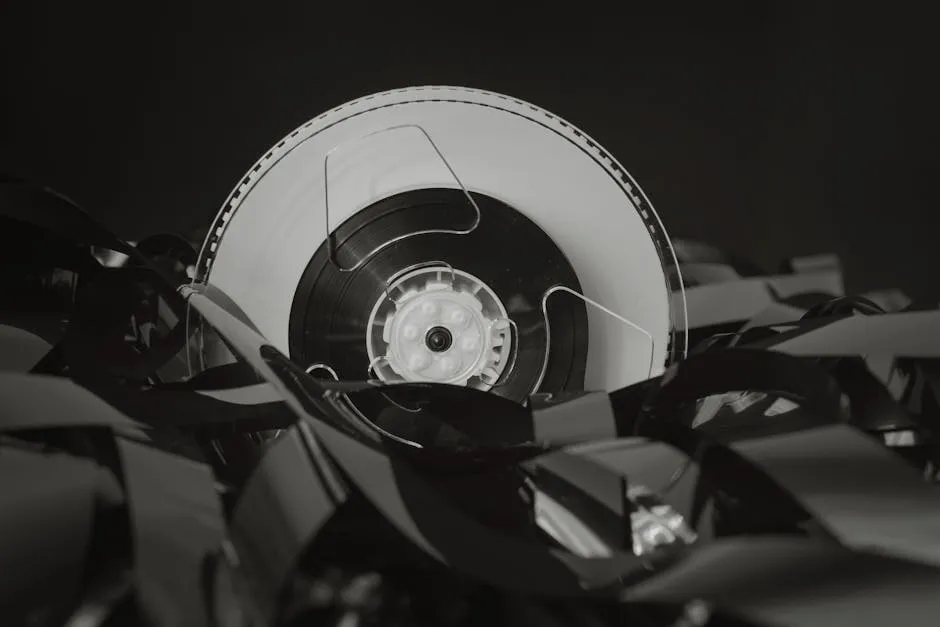
Photo by Dmitry Demidov on Pexels
Synth pads. Software pads have fixed partials that don't move the way analog oscillators do, which is why they often sound flat next to a real Juno or Prophet. A light tape stage adds a band of harmonic richness in the 1-3 kHz region, rolls the very top off slightly, and applies the soft compression that mimics the dynamic response of analog gear. Lower IPS settings (7.5-15) push more low-mid warmth into the pad; 30 IPS keeps things cleaner and more defined. On wavetable or FM pads that are already harmonically dense, the low-mids stack up into mud quickly, so drive those more conservatively.
How to dial it in without getting fooled by level
The first thing to fix is the level. Saturation makes things louder, and louder always sounds better in an A/B. Gain-match the output to bypass before you decide whether you like it. Decapitator has output trim, Saturn 2 has auto-gain, and most decent saturators have something equivalent - it's worth using.
The second thing is the pre-filter. Saturators react hardest to whatever's loudest in the signal, which on bass and kick is the sub. If you don't high-pass before the drive stage, the sub eats most of the distortion and you get mud instead of midrange harmonics. Either insert a high-pass at 80-150 Hz before the saturator, or use a multiband tool and leave the bottom band dry.
The third is restraint across the session. Even-order harmonics from multiple tube-style saturators pile up in the 200-500 Hz range, and that's the most common cause of a mix that feels "warm" on individual tracks and clogged on the bus. If you're saturating eight things, two of them are probably doing the work and the other six are just contributing low-mid build-up. Bypass aggressively and keep the instances that survive.
Pull the saturator off your master bus, drop it on the bass DI with a high-pass at 100 Hz in front of it, and drive it until you can hear the upper harmonics fill in on your laptop speakers. Gain-match, then unbypass on your monitors and check the low end is still intact. That single move does more for how the track plays on phones than most mastering-chain tweaking, and it's the clearest demonstration of what harmonic saturation is for.