What separates a live drum and bass break from a flat edit
 Tensormix Team
The difference between a break that breathes and one that sounds like a loop comes down to three details most edits strip away: ghost notes between the main hits, the room tail after each crack, and the high end that time-stretching takes.
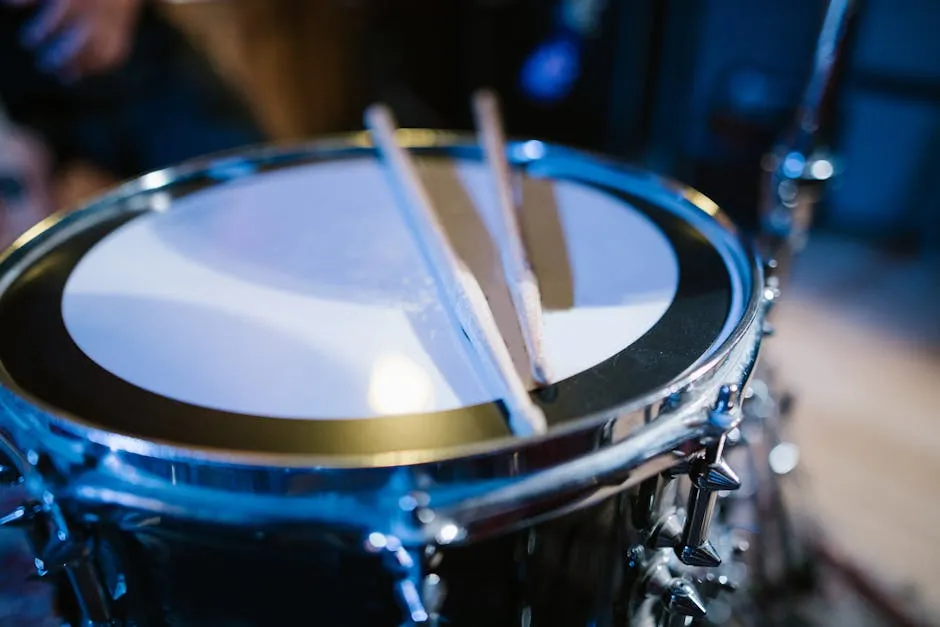
Put on the first thirty seconds of Calibre's "Drop It Down" from Second Sun and listen past the pads. Between every main snare hit, there's a quieter snare tap that pulls the pattern forward, and behind every crack the room hangs on for a beat before the next kick lands. Strip those two things away and you end up losing the majority of the break's groove and feel - keep them and you have a record that's been in rotation for two decades.
This post is about training your ear on the small things that separate an alive break from a flat one. Three producers worth ear-time across the spectrum: Calibre for liquid feel, dBridge for deconstructive break craft, and Alix Perez for soulful break placement.
Drums are an incredibly deep technical layer in DnB, and the hours you spend dissecting, programming, and experimenting with a break are exactly what separate a track with real groove and vibe from a soulless Splice loop anyone could have dropped in.
The ghost notes between the main hits
Cue up "Drop It Down" and focus on the snare. The backbeat sits where you expect it, but the spaces between aren't empty - there are softer snare and rim taps sitting roughly 10 to 15 dB below the main hit, landing on 1/16 and 1/32 subdivisions. These are ghost notes, and they're the single biggest reason a break feels like a drummer played it.
Calibre - "Drop It Down" feat. Singing Fats, from Second Sun (2005)
Calibre is a drummer himself and samples his own playing, which he told MusicRadar gives the work its personal character: "Working quickly gives me a unique and personal sound. It also helps that I like to sample my own playing." That micro-motion that fills the gap in between hits is what gives breaks a much more authentic, human feel.
When ghost notes get programmed in rather than preserved from a recording, the giveaway is uniformity. Real ghost hits vary by 5 to 15 velocity units between adjacent taps because the wrist can't help it. Program them at identical velocity on the grid and the pattern reads as a loop rather than a performance. Random offset of ±5 to 10 velocity units and ±3 to 5 ms timing humanisation is the minimum to break that up.
The room tail that gets cut off
The second thing to listen for is what happens after each snare hit. On a well-edited break, the snare rings out for 80 to 200 ms - room reflections, decaying high mids, the sense that the drums were hit in a physical space. On a flat edit, that tail is gone, sliced off at the next transient onset.
This is the cost of editing too tight. When you slice a break at every onset and butt the slices against each other, you're cutting the decay of each hit at the start of the next one. The result is a sequence of isolated drum samples rather than a continuous performance. The fix is mechanical: leave 80 to 150 ms of tail on each slice and use a short fade-out rather than a hard cut. Snares need more tail than kicks; rides and hats need more than snares.
The other route is layering, lots and lots of layering (watch any of Kove's production tutorials and you'll see just how much layering goes on in the average D&B track). Run the original full loop underneath the sliced version at -8 to -12 dB, high-passed at 150 to 200 Hz to keep it out of the sub. The loop carries the continuous room information while the slices carry the rhythmic precision. dBridge and Kabuki built the entire DECODED FORMS MASCHINE Expansion around this idea, re-recording four 1970s breaks ("Assembly Line", "God Made Me Funky", "N.T.", and "Funk Inc.") at the Abbey Road Institute and extending them with improvised phrases before deconstructing them into one-shots. The point of recording fresh versions wasn't fidelity for its own sake - it was capturing room and performance information that the original sampled hits had already lost.
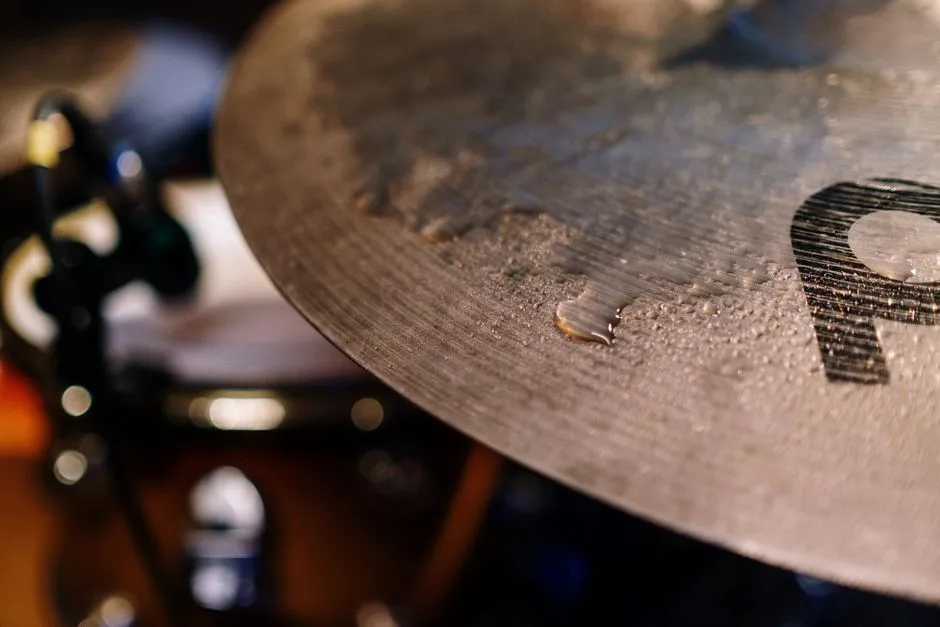
Photo by cottonbro studio on Pexels
What time-stretching does to the snare crack
Most break sources are between 90 and 110 BPM. DnB runs at 170 to 174. That's a 50 to 90 percent tempo increase, which is well past the point where any stretch algorithm starts smearing transients and shifting energy into the low mids. The audible result: the snare loses its crack and gains a cardboard thickness around 250 to 350 Hz.
There are two ways through this. The first is pitch-shifting instead of stretching. Pitch the break up 3 to 8 semitones and you reach a higher effective tempo with no stretch artefacts at all. The drums sound thinner and brighter, which is often the right sound for DnB anyway - this is how a lot of early jungle got its urgency. The trade is that the kick body and snare weight thin out with the pitch.
The second is EQ rescue after stretching. A high shelf at 6 to 8 kHz boosted 2 to 4 dB restores the air the algorithm flattened. A narrow peak at 1.5 to 3 kHz, 1 to 3 dB, brings back the body of the crack. A 2 to 3 dB cut at 250 to 350 Hz removes the boxiness that stretching introduces. Transient shaping the slice afterward, with attack pushed +3 to +6, sharpens what's left of the initial click.
The kick needs the same kind of attention but for different reasons. At 170 BPM, the kick has to register a defined click in the 1 to 5 kHz range so the ear can place it at speed, while keeping enough 50 to 80 Hz weight to feel physical. Over-stretching smears the click; over-processing buries the sub.
Where Alix Perez places the break
Alix Perez's 1984, released on Shogun Audio in 2009, is a useful listening bridge between the technical and the musical side of this. Perez has said of the album's approach: "There was a lot of sample use in there, which I'd definitely come from as a producer." DJ Fabio called "Forsaken" the best DnB track of 2010 on BBC Radio 1, and what's worth listening for on it isn't a trick of the edit but the placement.
The break sits underneath the Peven Everett vocal at a level where the ghost notes and ride pattern continue to do work without competing with the topline. The ride, in particular, lives between 6 and 12 kHz at maybe -15 to -20 dB relative to the snare, and it's the thing that keeps forward motion between the main backbeats. Strip a break down to just kick and snare for a clean modern mix and that high-frequency continuity disappears - the groove stops breathing between the obvious hits.
Go back to "Drop It Down" once more and listen specifically to the ride pattern under the main groove. Then put on something from dBridge's Exit catalogue and notice how often the break has been deconstructed into pieces but still carries continuous room information underneath. Then 1984 for how a break sits inside a song rather than carrying it. Three different uses of the same source material, all keeping the things that get cut first when an edit goes flat: the quiet hits, the tails, and the high end the stretch took away.